Internet on Rural Land in Mohave County: Starlink, 5G and Cell Signal
By Johnny Lands · Updated
You can get good internet on most rural land in Mohave County, even with no phone line or cable within miles. Starlink works almost anywhere with a clear view of the sky, local fixed wireless and 5G home internet reach many lots near Kingman and Golden Valley, and a phone hotspot can carry you through a weekend. The trick is checking your exact parcel before you buy, and budgeting the power a dish uses if you are off-grid.
Your options, from easiest to most local
| Option | How it works | Good for | Watch out for |
|---|---|---|---|
| Starlink | A small dish talks to low-orbit satellites | Almost any parcel with open sky, remote work, streaming | Needs power around the clock, and hills or trees in the north sky can cause dropouts |
| Local fixed wireless | An antenna on your property points at a provider's tower | Lots with a line of sight to a tower near Kingman or Golden Valley | Coverage is spotty, and one ridge can block you |
| 5G or LTE home internet | A cellular router from a phone carrier | Parcels with solid cell signal | Signal on the lot can be weaker than in town |
| Phone hotspot | Your phone shares its data | Weekend visits, light use | Data caps and weak signal in low spots |
| Older satellite (Viasat, HughesNet) | A dish aimed at one satellite far above the equator | Places nothing else reaches | High latency makes video calls and gaming painful |
Most people who camp on their land or build out here end up on Starlink, at least at first. It is the one option that doesn't depend on which side of a hill your parcel sits.
Check your parcel before you buy
Vacant land usually has no street address, so typing one into a provider's website won't work. Here is how to check anyway:
- Get the coordinates. Every listing should give you the GPS location of the parcel. Ours do.
- Use the FCC National Broadband Map. At broadbandmap.fcc.gov you can click any spot on the map and see which providers report service there and at what speeds. It is the best free starting point.
- Check carrier coverage maps for Verizon, AT&T and T-Mobile at the same spot. Treat them as optimistic.
- Test on site. Stand on the spot where you'd build, open a speed test on your phone, and try each carrier if you can borrow phones. Then walk 200 feet and try again. Signal changes a lot over short distances out here.
- Look north. For Starlink, the dish wants a wide open view of the sky, mostly to the north in the US. The Starlink app has an obstruction check you can run with your phone camera on the lot.
Golden Valley and the flats west of Kingman are mostly wide-open sky. Chloride sits right at the foot of the Cerbat Mountains, so a dish there may need a taller mount or a careful spot to see past the ridgeline.
Starlink on off-grid land: the power math
If you are running on solar, the dish is a constant load, and it adds up overnight. Starlink's own spec sheets list these average draws:
| Kit | Average power use | Rough daily energy if left on 24 hours |
|---|---|---|
| Starlink Standard | 50 to 75 watts | About 1.2 to 1.8 kWh |
| Starlink Mini | 25 to 40 watts | About 0.6 to 1 kWh |
Add the router and whatever you plug in. For a small off-grid system that can be the single biggest load after a fridge. Two easy fixes: set a sleep schedule in the Starlink app for the hours you don't need it, or use the Mini, which sips power and runs on 12 volts. Our guide to getting electricity to vacant land covers sizing solar and when a utility line makes sense.
Mounting a dish in the desert
- Wind is the real enemy. Spring winds in Mohave County can be strong. A dish on a weighted base or a pole set in concrete stays put; one on a folding chair does not.
- Keep it off the ground in a wash. Monsoon runoff will find a low-mounted dish.
- Run cable smart. Protect the cable from UV and from rodents, which love to chew wiring on rural lots.
- Heat is fine. The dish handles desert heat; your router in a closed metal box may not. Give the electronics shade and airflow.
Cell signal for calls and texts
Even with Starlink, you'll want your phone to work. Your phone can make calls over Wi-Fi once you have internet (turn on Wi-Fi calling). Where the signal is weak but present, a cellular signal booster with an outside antenna on a mast can turn one flickering bar into usable service. Boosters need some signal to work with. They can't create it from nothing.
One more tip: tell family where your land is in words, not only coordinates, and know the nearest spot where your phone always works. In an emergency, that matters more than streaming speed.
Remote work from your land
Plenty of buyers want to work from a desert lot a few days a week. Starlink handles video calls well in most conditions. Heavy monsoon storms can cause short dropouts, and power is the usual weak link, so plan battery capacity for a full workday plus cloudy weather. A phone hotspot as backup is cheap insurance.
If you will be spending nights out there while you set things up, read camping or putting an RV on your land in Mohave County for the county rules.
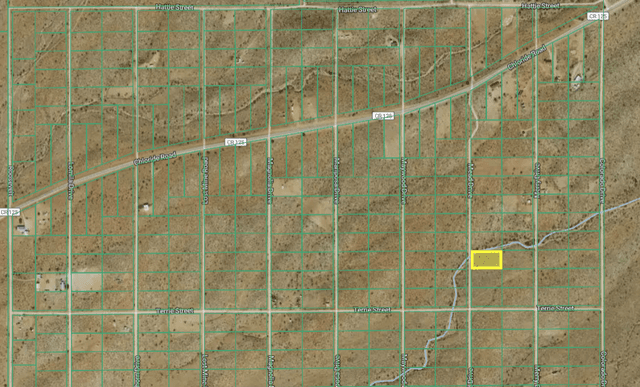
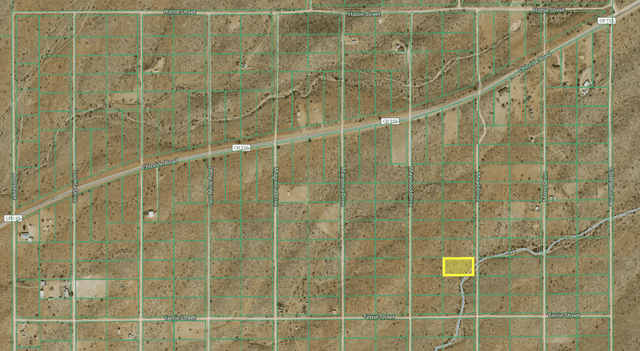
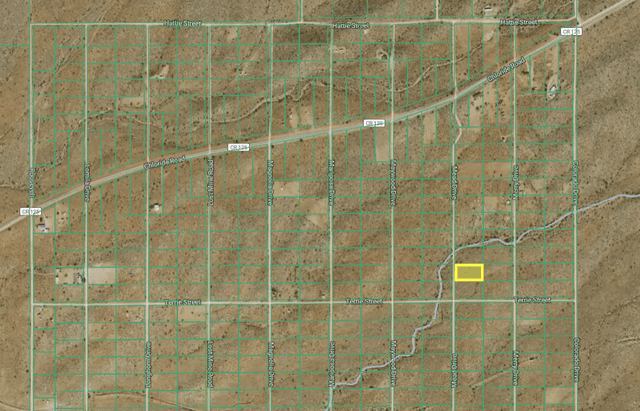
Distance to power on the parcels we have listed now:
- No power at the lot today. The abundant sunshine makes solar a natural fit
- Utility power is nearby along the area roads. The abundant sunshine makes solar a natural fit
- Power at this lot has not been confirmed yet. There are a few homes within half a mile, and the abundant sunshine makes solar a natural fit
Want help checking coverage on a specific parcel? Ask us and we'll send the coordinates, or browse land for sale in Mohave County (from $99–$260 a month right now).
Common questions
FAQ
Can you get internet on vacant land in Mohave County?
Yes. Starlink works on most parcels with a clear view of the sky, and fixed wireless or 5G home internet reaches many lots near Kingman and Golden Valley. Check the parcel's coordinates on the FCC National Broadband Map and test cell signal on site.
Does Starlink work in Golden Valley and Chloride, AZ?
Starlink reports service across nearly all of the area. The open terrain around Golden Valley is ideal. In Chloride, the Cerbat Mountains can block part of the sky, so run the obstruction check in the Starlink app before you mount the dish.
How much power does Starlink use off-grid?
Starlink lists an average of 50 to 75 watts for the Standard kit and 25 to 40 watts for the Mini. Left on all day, that is roughly 1.2 to 1.8 kWh or 0.6 to 1 kWh a day.
How do I check internet service for land with no address?
Use the parcel's GPS coordinates. On the FCC National Broadband Map you can click the exact spot to see which providers report service there.